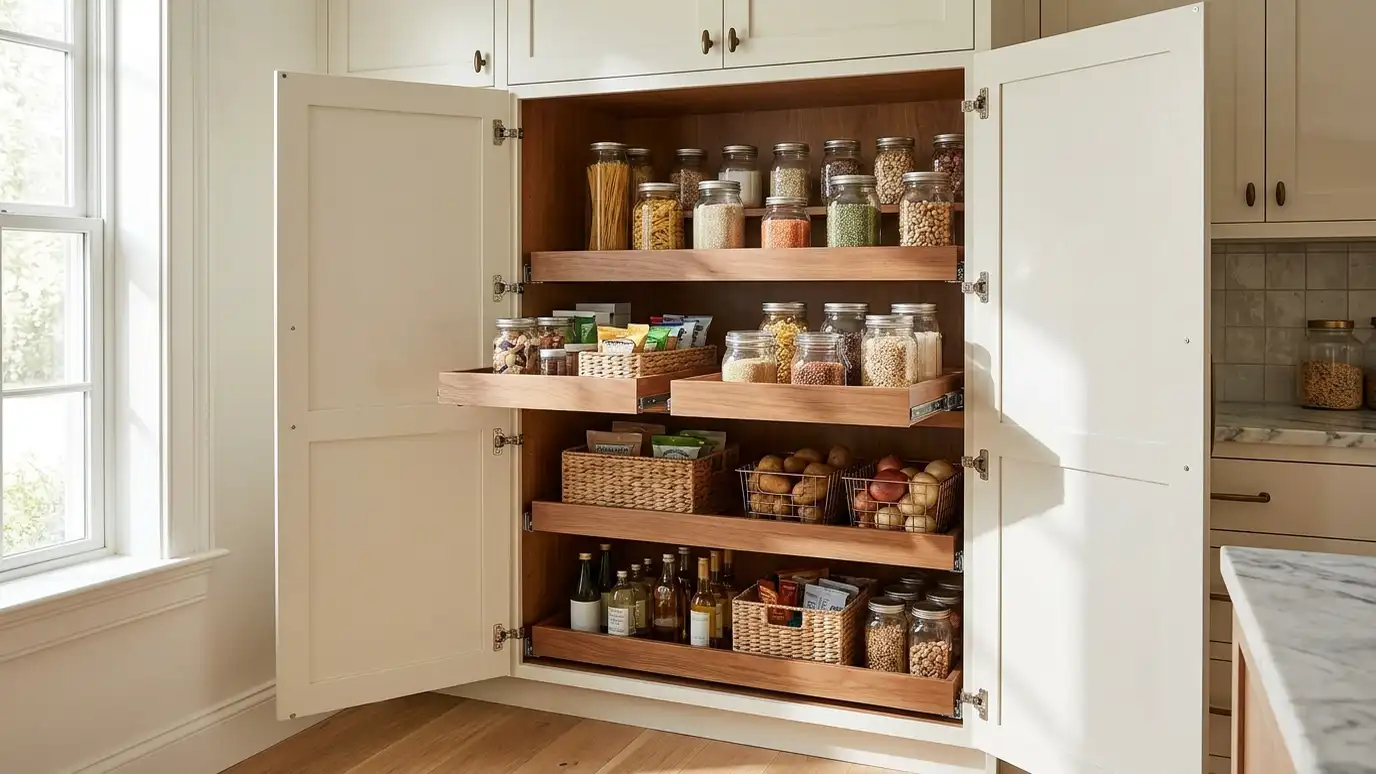
Know what you store
Make a list of what goes in a pantry: cans, boxes, bulk items, small appliances and bottles. Note which ones you use every day.
Measure the tallest and widest items, because they decide shelf spacing.
Consider how you shop, since bulk buyers need more space.
Choose a pantry type
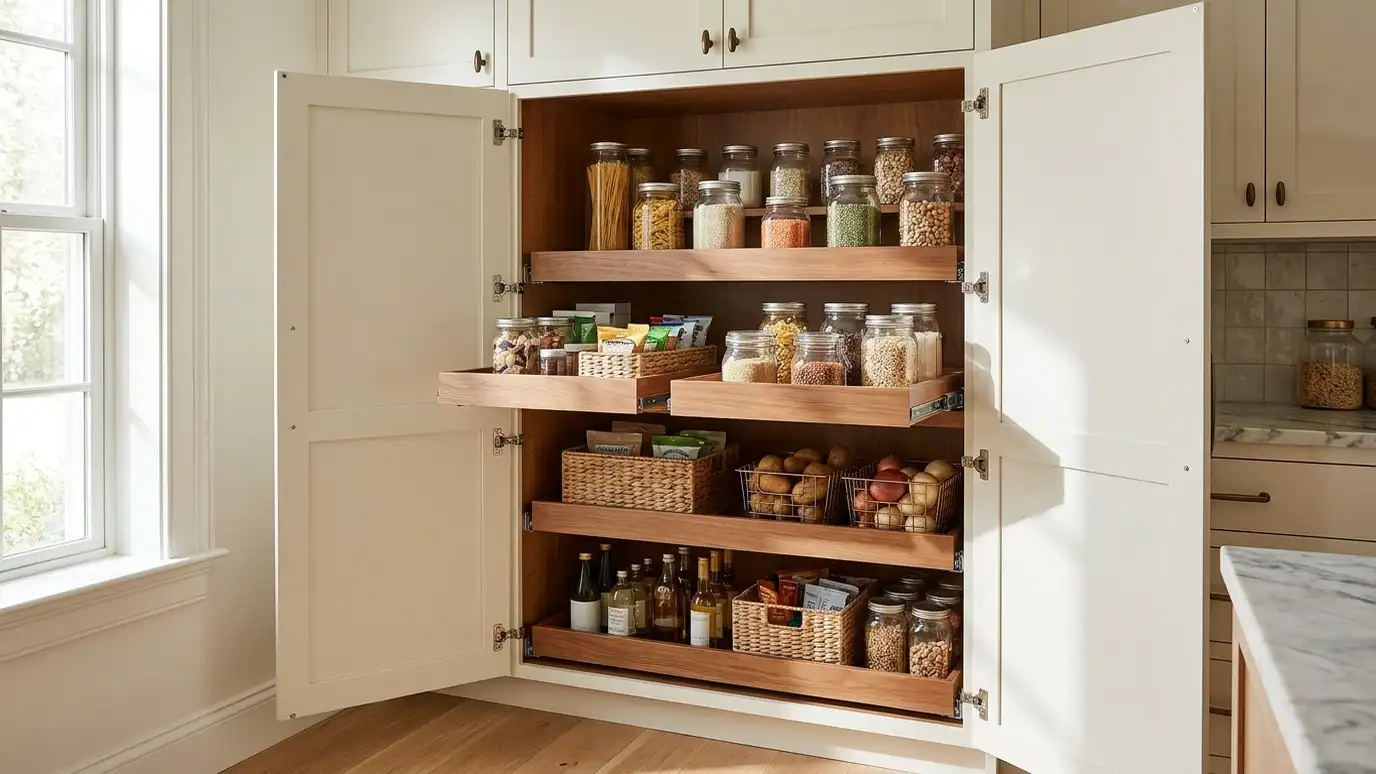
A walk-in pantry has the most capacity but needs floor area. A tall cabinet pantry gives organized storage in a smaller footprint. A pull-out pantry uses narrow gaps.
A reach-in closet can also become a pantry with shelves and pull-outs.
Look around your kitchen for spaces that are not working hard.
Plan the shelves
Shallow shelves keep items visible. Deep shelves are best with pull-out trays.
Adjustable shelves allow changes as your needs change.
Place heavy items low and light ones high.
Add pull-outs and organizers
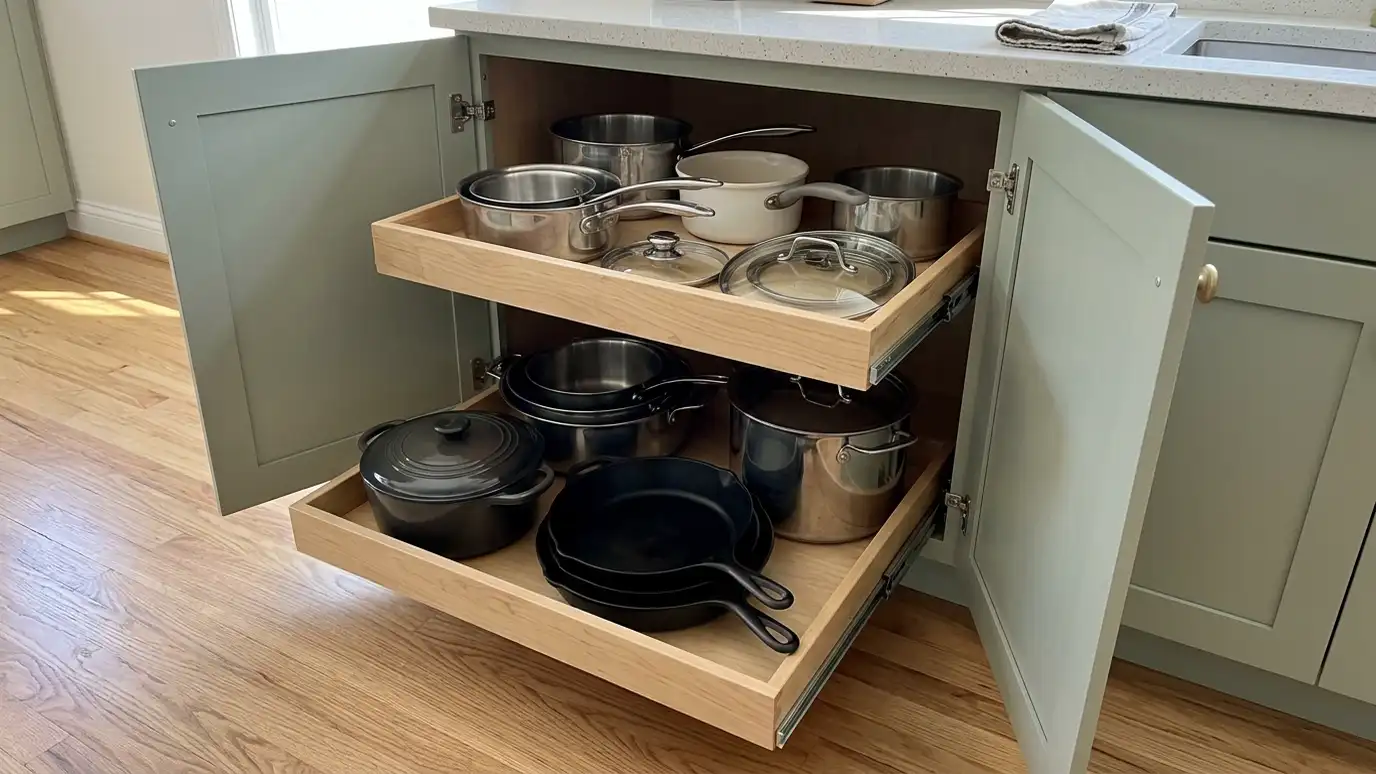
Roll-out trays bring items from the back to the front. Door-mounted racks use the back of the door.
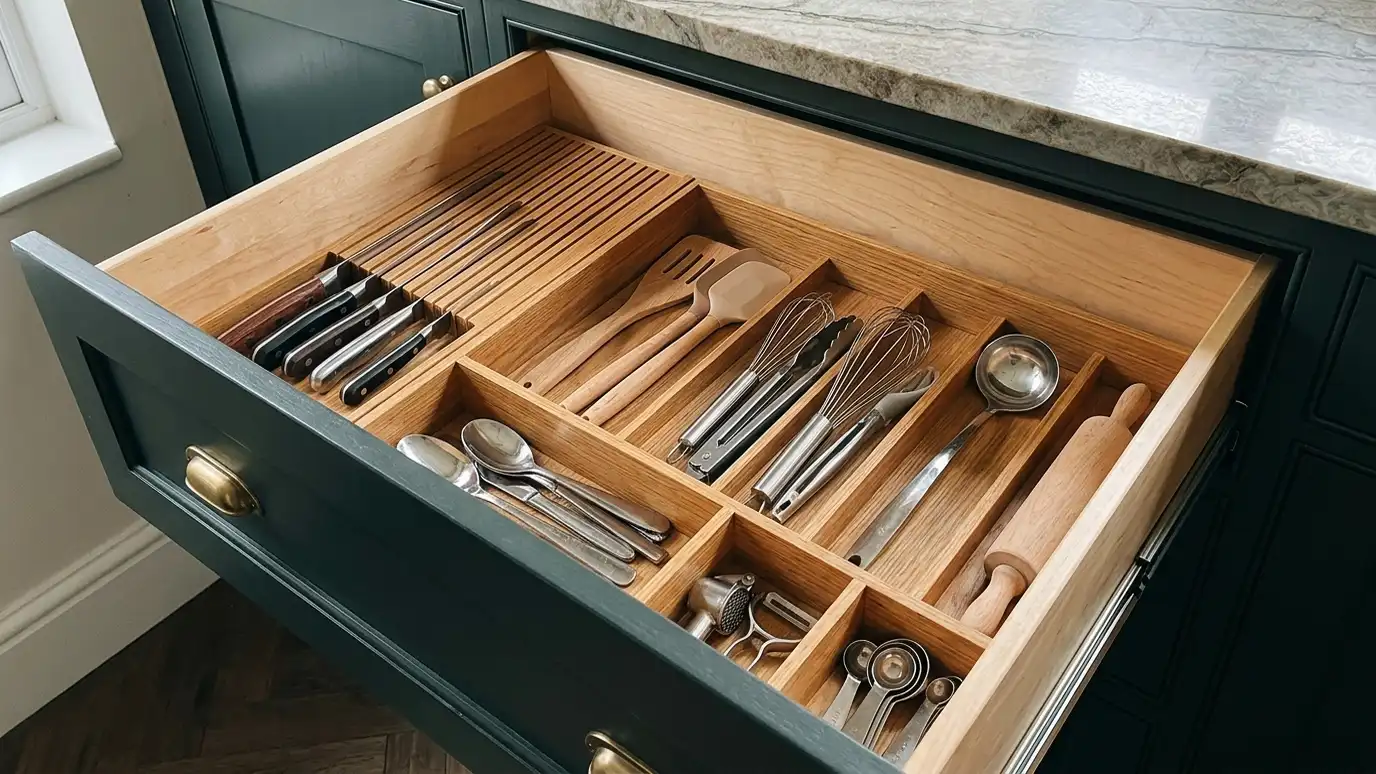
Drawers in a pantry hold bags, wraps and small items.
Add bins for produce and a spot for a step stool.
Power and light
A switch-on light makes a pantry easier to use. A small outlet allows a small appliance.
If you add power, a qualified electrician should make the connections.
Add ventilation if the pantry is a closed room.
Keep it working
Label shelves or bins and keep like items together.
Check dates and rotate stock every few months.
If your needs change, adjust the shelves or add organizers.
Plan the shelves around what you really store, and add pull-outs wherever shelves are deep.