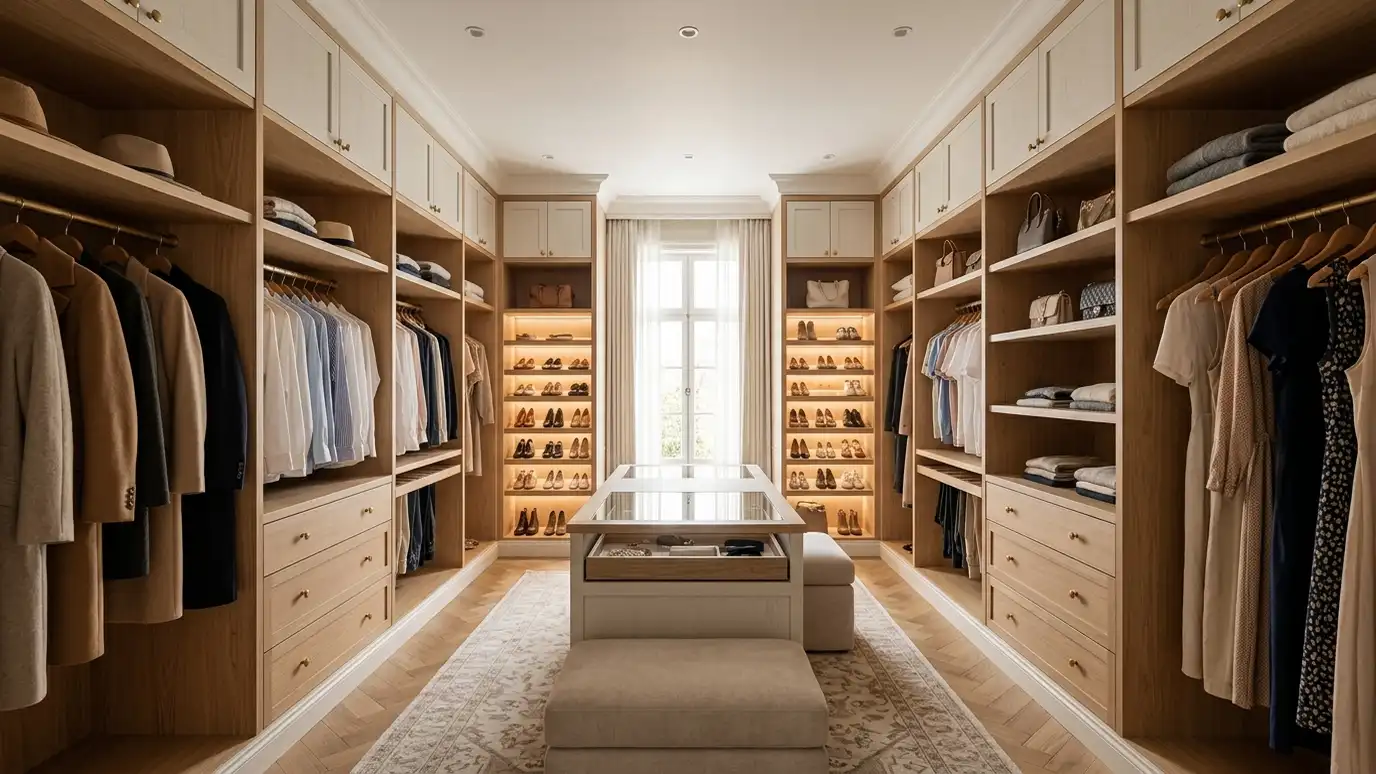
Take inventory
Count what you hang, fold and store: long dresses, shirts, pants, sweaters, shoes, bags and accessories.
Measure the length of hanging items, since that decides rod height.
Consider what you plan to add, so the closet has room to grow.
Measure the closet
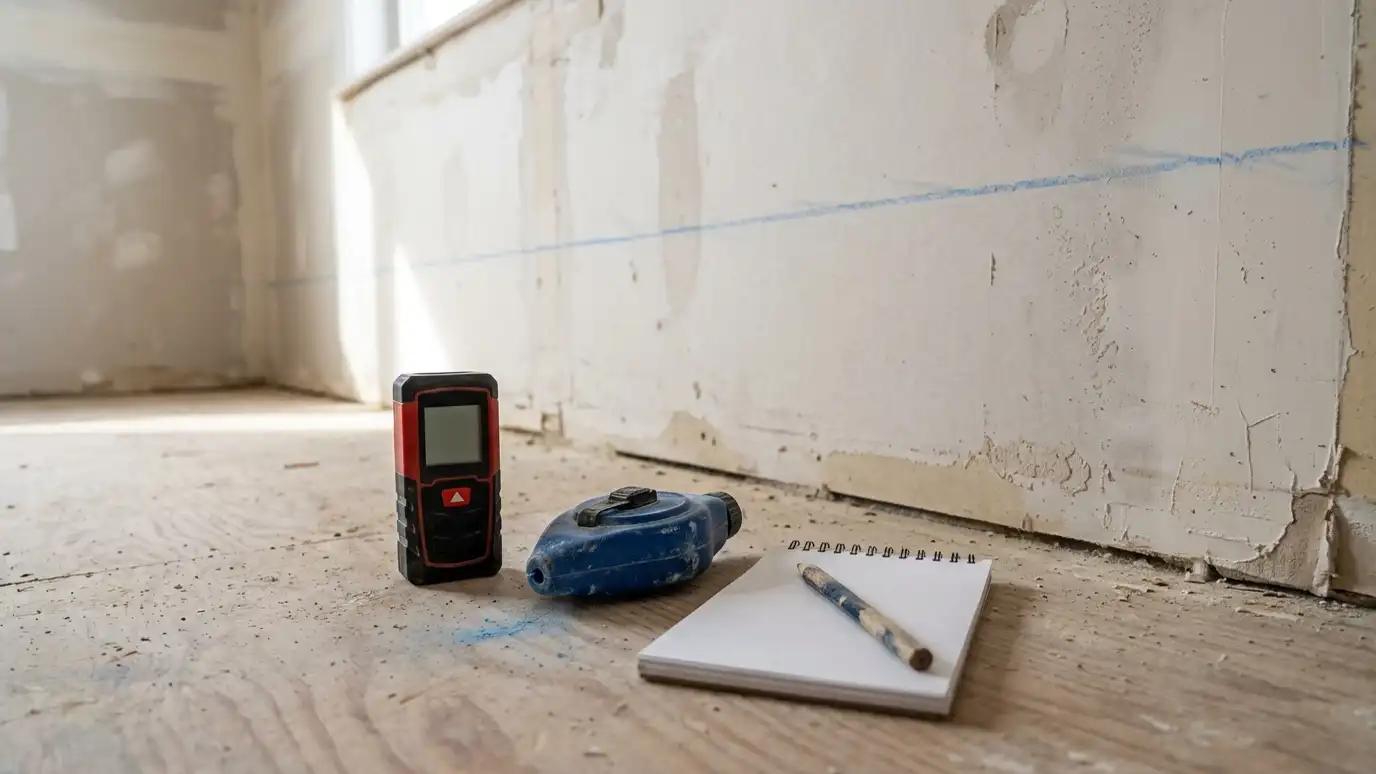
Measure the walls, the ceiling height and the door opening. Note outlets, vents and windows.
Check for sloped ceilings or odd corners, since custom closets can use them well.
Take photos for reference.
Plan hanging space
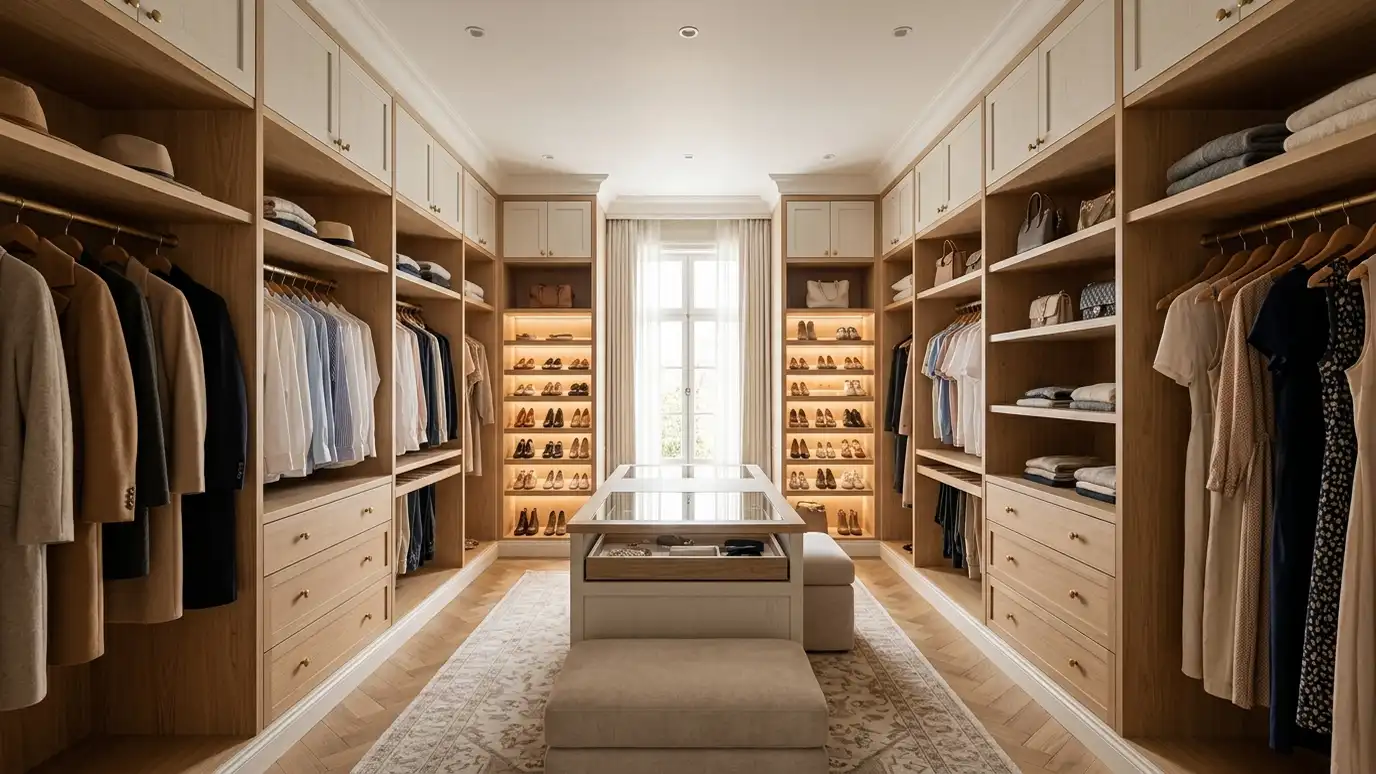
Double hanging, with two rods one above the other, doubles the space for shirts and pants.
Leave a section of long hanging for dresses and coats.
Plan rod height so you can reach the top rod comfortably.
Shelves, drawers and shoes
Shelves are good for sweaters and bags. Drawers are best for small items and underwear.
Shoe shelves, pull-outs or racks keep pairs together.
Add a hamper or a pull-out for laundry.
Lighting and finish
Good light inside the closet makes it a pleasant place to dress.
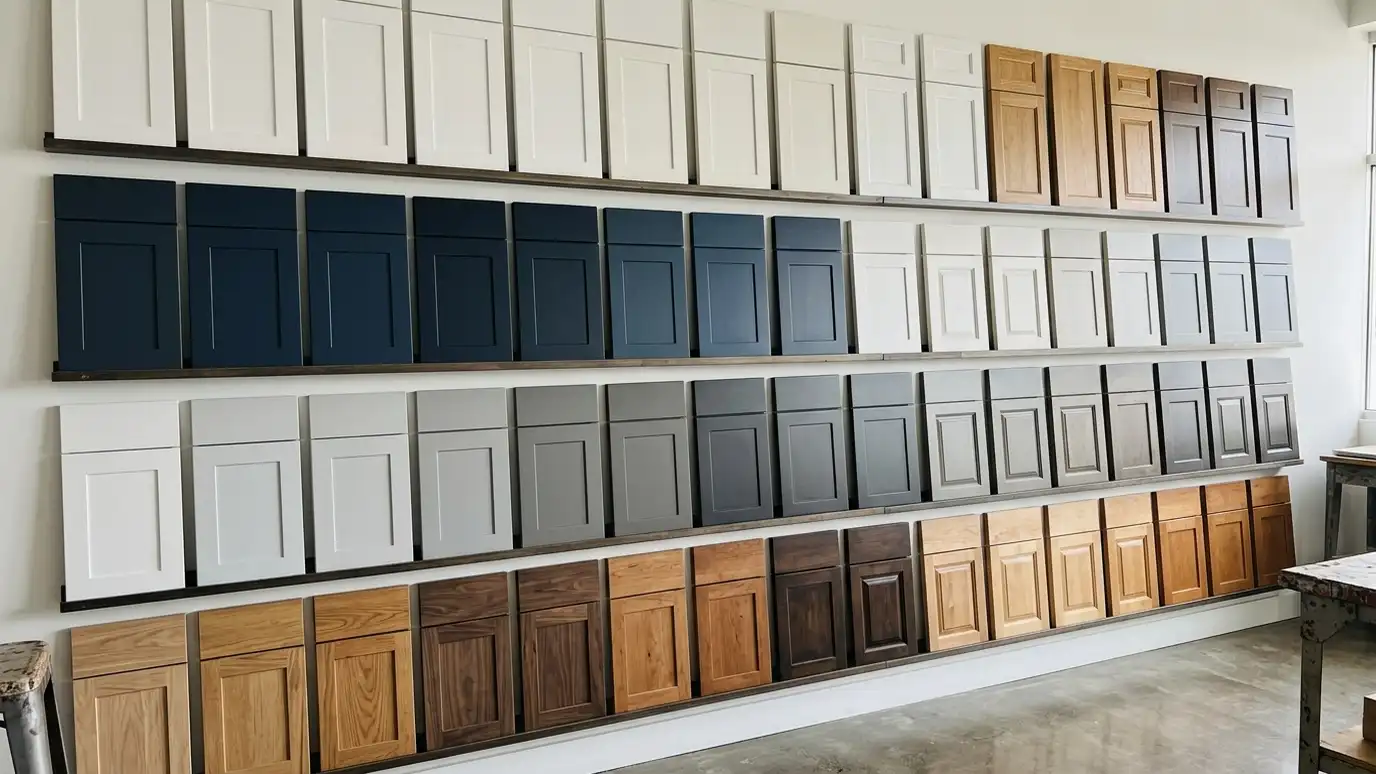
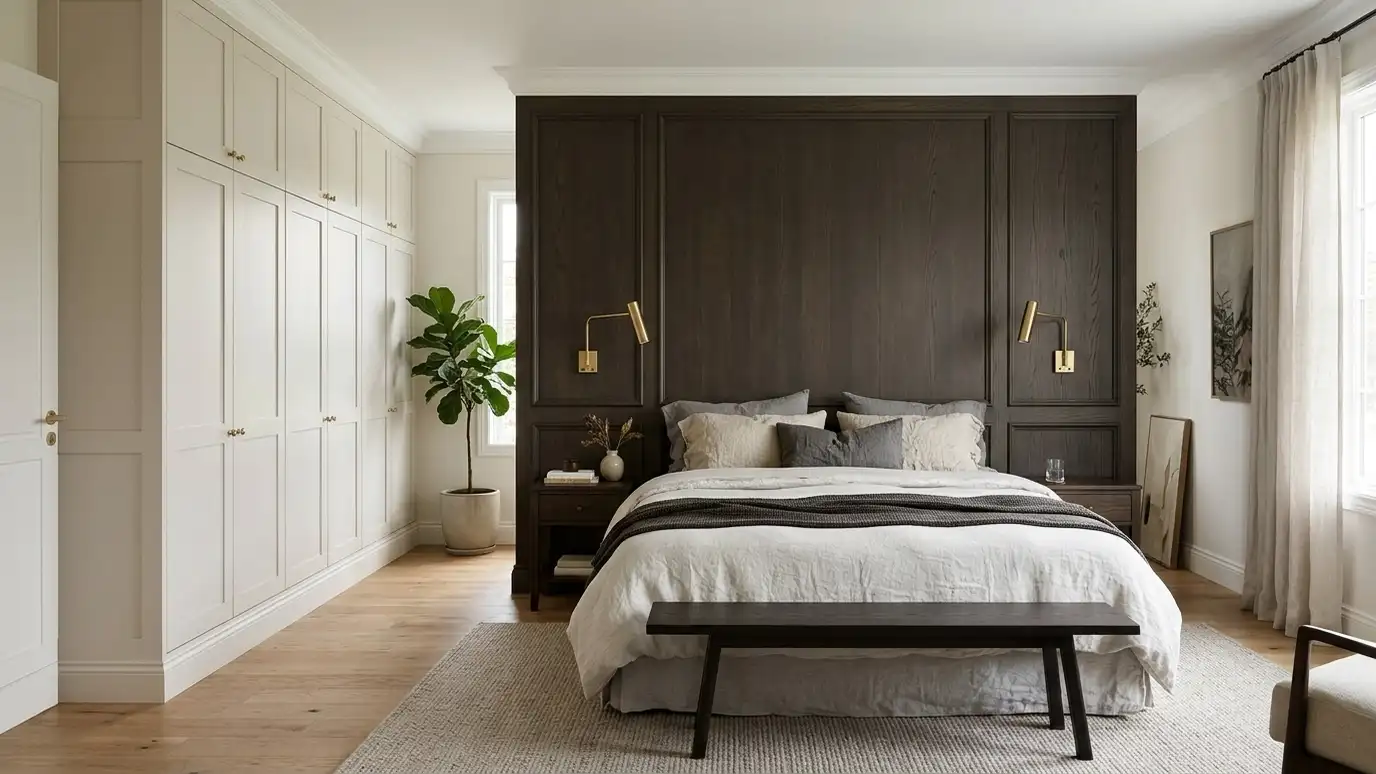
Choose finishes that match the room, such as painted wood or stained panels.
A mirror, a bench or an island can make a walk-in feel like a boutique.
System or custom
A ready-made system is quick and affordable for simple closets. A custom closet fits every inch and can be built from fine materials.
Many homes use custom in the primary closet and a system elsewhere.
We help you decide where each makes sense.
Plan the closet around what you own, then use the full height of the space.